
Key Points
- Sediment buildup from hard water conditions in the Texas Panhandle can be responsible for your water heater not working.
- Worn-out components may disrupt normal operation in your water heater and cause your hot water to not stay hot for long.
- Some problems point to a simple repair, while others signal that your tank no longer matches household demand or condition.
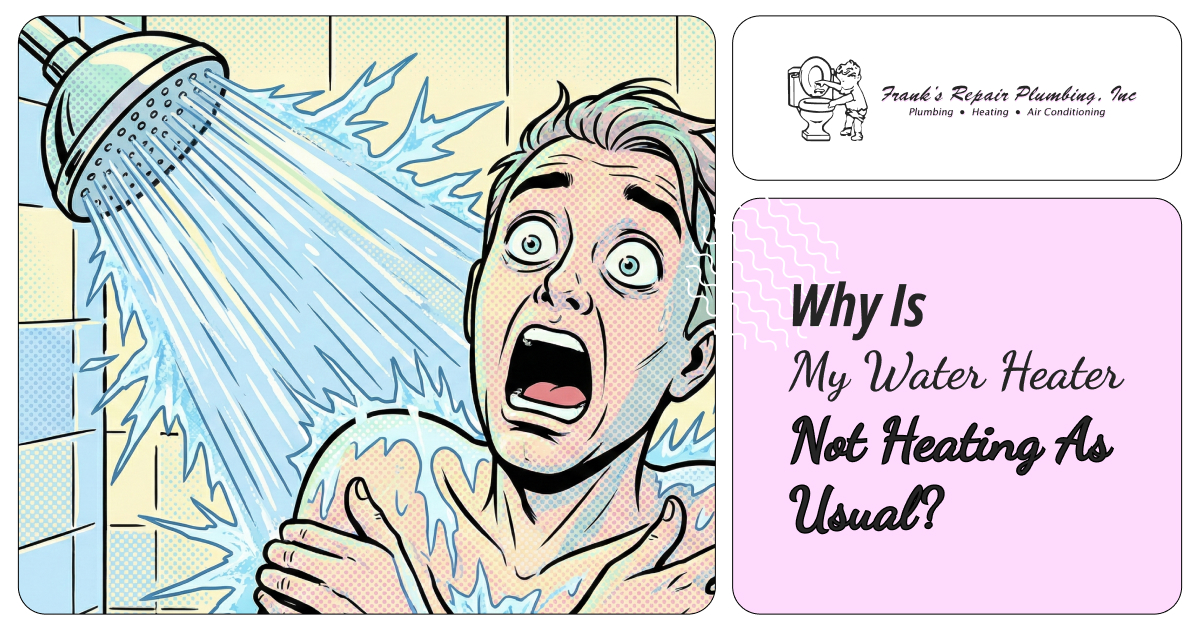
Lukewarm water, showers that turn cold, or other hot water supply problems usually trace back to one of several common water heater issues. Across the Texas Panhandle, hard water buildup is a frequent contributor, but worn-out parts or neglected maintenance can also interrupt hot water supply. Learn why your water heater isn’t heating like it should and when to call a plumber at Frank’s Repair Plumbing for help.
Sediment Buildup in the Tank
Sediment buildup is a common culprit behind water heater problems. The Texas Panhandle is notorious for hard water, which contains relatively high amounts of dissolved minerals such as calcium or magnesium. When the water heats in your unit, minerals can settle and collect at the bottom of the tank. This sediment creates an insulating layer between the burner or element and the water and prevents the water heater from operating efficiently.
Early signs of sediment buildup can be subtle, such as your hot water supply running out incrementally faster. As the sediment builds, water from your faucets may feel warm instead of hot and have a slightly cloudy appearance. The layer of sediment may also cause popping or rumbling sounds from the hot water trapped beneath, which in turn poses increased risk of tank leaks.
Scheduling professional services to flush your water heater helps prevent sediment from building up excessively. If the sediment hardens, a professional can clean the tank and inspect other components for damage.
Faulty Thermostat or Incorrect Temperature Setting
A thermostat tells the water heater when to heat and when to stop. If the setting is too low, the hot water from your faucets may not be as warm as you expect. If the thermostat becomes uncalibrated or malfunctions, it may cause the heater to stop and start heating incorrectly, increasing strain on your heater and reducing its efficiency.
This issue often shows up as temperature swings, with hot showers one day, then lukewarm water the next, regardless of hot water usage. Here’s how to tell if the thermostat is involved:
- Hot water temperature changes noticeably without a change in household routine.
- Water doesn’t reach the temperature it used to.
- Heater stops and starts heating frequently.
- Heater runs continuously.
Internal Heating Element Failure (Electric Water Heaters)
Electric water heaters typically use two heating elements, one upper and one lower. The upper element heats the top portion first, then the system shifts power to the lower element to heat the rest of the tank.
When one element fails, the heater may still produce hot water but experience lower output and slower recovery. Hot water may start strong but fade out following showers or laundry cycles, and the breaker associated with the heater may trip repeatedly.
Pilot Light or Ignition Problems (Gas Water Heaters)
Older gas water heaters use a pilot light, and modern models usually use an electronic ignition to ignite the burner. If the flame goes out or the ignition fails, most often due to dirty or worn parts, your heater won’t be able to start a cycle to heat water.
Homeowners often discover this problem in the morning, after the water heater has gone unused during the night. Some ignitions may work intermittently and provide inconsistent periods of warm water. This problem requires a professional inspection to prevent dangerous gas or exhaust leaks.
Broken Dip Tube
The dip tube is a plastic device inside the tank that directs incoming cold water to the bottom of the tank. This design prevents cold water from mixing with hot water near the top outlet, where it exits when you turn on a hot water tap. When the dip tube cracks, the cold water brings the temperature down and results in lukewarm water to your shower or sink, which could explain why your water may not be getting hot.
A plumber can replace a broken dip tube, and this problem is usually a simple repair if the tank is otherwise in good condition.
Tank Too Small for Your House
Your water heater may work as designed, but it may not be able to keep up with your household’s hot water demand. Changes in your home, such as bathroom renovation or additional occupants, can increase hot water needs and overwhelm your water heater. In these scenarios, you may experience lukewarm temperatures or an insufficient supply of hot water, and the problem lies with capacity rather than a breakdown.
If your hot water is consistent during low use periods but weakens when household members shower back-to-back or you run multiple appliances at once, an undersized tank is likely responsible. A technician can estimate your hot water demand based on household size, fixture types, and usage patterns, then recommend a properly sized tank or a tankless water heater option.
Power or Gas Supply Issues
Water heaters rely on steady electricity or gas. Tripped breakers, loose wiring, faulty gas valves, or pressure irregularities can cause supply issues and interrupt heating cycles.
To troubleshoot an electric water heater, check your electrical panel for a tripped breaker and locate the shutoff switch to check that it’s switched on. For gas heaters, inspect the gas shutoff valve position — the handle should be parallel with the gas pipe when the gas to your heater is on.
When to Repair vs. Replace Your Water Heater
Deciding between water heater repair and replacement depends on the unit’s age and condition. Repairs are practical if the tank is structurally sound and the repairs are relatively simple and cost-effective. Replacement may be a better long-term solution if your water heater shows these signs:
- The tank is nearing or past the end of its expected operating life.
- Repairs are increasingly frequent or costly.
- The heater is inefficient and drives up your energy bills.
- The tank no longer matches your household’s capacity needs.
Choose Frank’s Repair Plumbing for Water Heater Repair
If you’re dealing with lukewarm water issues, rely on our team of experts at Frank’s Repair Plumbing. Contact us to schedule water heater service, and we’ll pinpoint the cause, explain your options clearly, and restore hot water to your taps.
Frequently Asked Questions
How do I reset my hot water heater?
To reset an electric water heater, shut off power at the breaker, remove the access panel from the water heater, and press the red reset button on the thermostat. For gas units, follow the manufacturer’s pilot or ignition restart steps.
How long do water heaters last?
Most tank-style water heaters last 10 to 15 years. Maintenance frequency, usage, fuel type, hard water, and other factors influence how long your water heater may last.
How often should I flush my water heater?
Schedule a maintenance service to flush your water heater’s tank approximately once per year. In hard water areas like Amarillo, mineral sediment accumulates quickly, so annual flushing helps maintain heating performance and efficiency.