
Key Points
- Frozen pipes can lead to leaks, bursting, and water damage.
- Winterizing your plumbing is the best way to avoid plumbing emergencies.
- If a pipe freezes or bursts, call an emergency plumber right away.
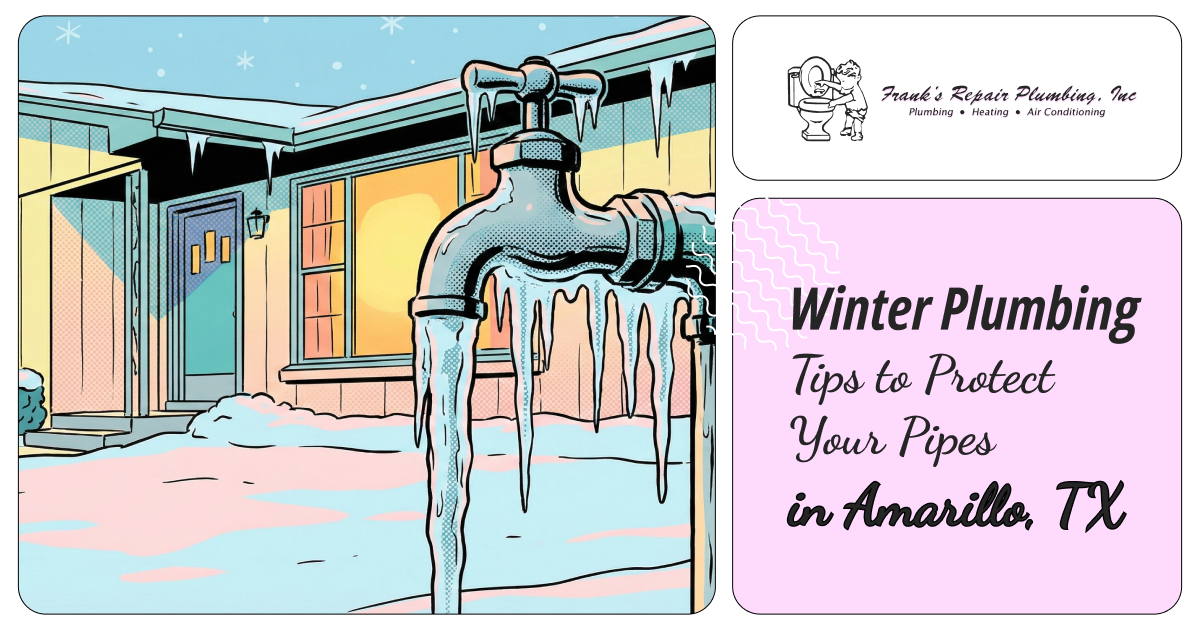
When Amarillo winters drop to 25°F, it’s not just cozy coats that you’ll need to prepare — it’s also important to get your pipes ready for the cold days. Freezing temperatures can quickly lead to leaks and burst pipes, which can damage your home and make for costly repairs. We’ll explore the best plumbing tips for winter and what to do in case of a winter plumbing emergency.
Let Faucets Drip During Freezing Weather
Stagnant water is much more likely to freeze than running water. If your area is due for a cold spell, turn your faucet on and allow it to drip until temperatures warm up slowly. A slow drip will ensure water continues moving through the pipes, minimizing pressure and preventing freezing, fractures, and bursts.
Always drip the faucet farthest from your main water shut-off valve to keep water moving throughout the plumbing system. Be sure to check local recommendations, as some municipalities may require residents not to drip faucets to prevent water system pressure issues.
Fix Plumbing Leaks
Hidden plumbing leaks can lead to water damage any time of year, but they’re especially problematic in winter. When temperatures drop, cold can get into your pipes and freeze the water, causing your pipes to expand and leading to even bigger leaks, bursts, mold, and other health hazards. Call a plumber for professional pipe repair before the weather gets cold to prevent the risk of bigger plumbing problems.
Insulate Exposed Pipes
Exposed pipes can freeze quickly, leading to cracks, leaks, or burst pipes. One of the best winter plumbing tips to avoid this is to insulate exposed pipes, especially those located outdoors or in cooler areas of your home like basements and mudrooms.
There are several types of insulation available, depending on the size and shape of your pipes. If your pipes are tough to reach or if you’d prefer to have a pro take care of the job, our team of professional plumbers gets the job done right to protect your pipes from the cold.
Disconnect and Drain Outdoor Faucets and Hoses
When temperatures plummet, water left sitting inside your outdoor hoses will often freeze and expand, putting intense pressure on your pipes. This pressure can lead to cracks, bursts, and other damage to your plumbing system. To prevent this, take the following steps to disconnect and drain outdoor hoses before the weather turns cold:
- Step 1: Turn off the faucet to stop the water supply.
- Step 2: Remove the spray nozzle.
- Step 3: Take the hose off of the faucet.
- Step 4: Drain the hose.
- Step 5: Put the hose in a warm, dry space indoors.
If your hose is already frozen, remove it from the faucet and bring it indoors to thaw. If you need to use your hose during the winter, you can also place heat tape around it to prevent freezing.
Open Cabinets Under Sinks
Closed cabinet doors can trap cold air inside, leaving your under-sink plumbing susceptible to freezing. If the temperatures drop, open the doors to allow warm air from your home to circulate around the pipes and keep them warm. In especially cold areas, you can use a space heater to provide warmth and prevent the pipes from freezing.
Keep a Consistent Home Temperature
To prevent pipes from getting too cold, keep your home at a steady temperature above 55 degrees. Consistent temperatures are also good for your HVAC system, since your heater won’t have to turn on and off to adjust.
Maintenance tip: Frozen pipes aren’t the only thing that can go wrong in winter. Drastic temperature changes in late winter and spring can lead to heavy water flow, leading to sewer backups and other problems. Regular plumbing inspections are the best way to prevent messy plumbing surprises.
Know Where Your Main Water Shut-Off Valve Is
It’s important to know where your main shut-off valve is to stop the flow of water if a burst pipe or other winter plumbing disaster occurs. The valve is often found in your basement, crawl space, or along the perimeter of your home. Familiarize yourself with its location and periodically test it to ensure it works in an emergency. It can be helpful to tie a piece of colorful outdoor tape or ribbon to the handle so that other members of the household can quickly find the valve if a plumbing emergency strikes.
Unique Considerations to Winterize Pipes in Amarillo & Texas Panhandle Homes
From heritage homes to sudden temperature drops, keep an eye out for these unique considerations when winterizing your Amarillo or Texas Panhandle home.
Older homes and plumbing
Older Texas homes often have plumbing built into less insulated areas like crawl spaces and exterior walls. It’s easy to overlook these pipes because they’re not outdoors and often aren’t visible. A licensed plumber can detect leaks and protect these pipes so you don’t have to worry about freezing, leaks, or burst pipes inside your walls and floors.
Quick temperature drops
Amarillo and the Texas Panhandle can go from mild to cold very quickly, so it’s important to be prepared. Don’t be afraid to start your winter plumbing maintenance early, and you’ll also have the benefit of more comfortable temperatures when you’re working with outdoor pipes.
High winds
Wind chill doesn’t just make the day feel colder — it can also impact your pipes. Intense, cold winds can increase the rate of freezing for exposed outdoor plumbing, so it’s important to take into account wind chill as well as the outdoor temperature when winterizing your plumbing.
Call Frank’s for Winter Plumbing Preparation and Repairs
Facing a plumbing emergency this winter? Have no fear — Frank’s is here with professional plumbing solutions for your Amarillo home. Whether you’re looking for emergency plumbing repairs or simply preparing your pipes for winter, our team is on hand with knowledge, experience, and great customer service. Contact us today and discover how Frank’s can help get your Amarillo home ready for winter.
Frequently Asked Questions
What happens if I forget to winterize and a pipe bursts?
If you don’t winterize and a pipe bursts, you may have to deal with significant water damage. You can also be left with no water, poor water pressure, and a spike in your water bill. If you suspect a burst pipe, call for emergency plumbing repairs immediately to mitigate the damage.
What are the warning signs of a frozen pipe?
If your pipes are beginning to freeze, there will often be warning signs before they completely freeze or burst. Keep an eye out for low water pressure, slow drains, no water, bad smells, or small leaks around your pipes. You can also inspect the pipe and touch it to see if it feels very cold.
How cold does it have to be for pipes to freeze and burst?
Pipes can typically start to freeze around 20°F. Outdoor pipes are more likely to freeze, but indoor pipes in colder areas like basements can also freeze after a while when the outdoor temperatures start to find their way indoors.